The Best Way to Survive Cold Water Is to Stay Out of It
Whether you’re working offshore, responding to an emergency or enjoying a weekend on your boat, cold water presents the same danger: an unexpected immersion can quickly affect your ability to breathe, move and help yourself.
Preparing for that possibility means looking beyond what happens after someone falls overboard. Keeping people out of the water, helping a damaged vessel remain afloat and having a practical recovery plan all play a part.
Why Cold Water Is So Dangerous
Hypothermia is often the first concern that comes to mind, but it isn’t always the most immediate threat. Cold shock can cause an involuntary gasp and rapid breathing within seconds of entering the water. If your face is submerged, that sudden gasp can lead to inhaling water. Even a capable swimmer can struggle to control their breathing during those first moments.
As exposure continues, cooling muscles and nerves can reduce strength, coordination and grip. Tasks that seem straightforward onboard, such as holding a rescue line, fastening equipment or climbing a boarding ladder, can become increasingly difficult. A person may lose the ability to assist with their own rescue before hypothermia becomes the primary concern.
Longer exposure can lead to hypothermia, affecting judgement, movement and consciousness. Together, these risks show why staying afloat is only part of cold-water survival. Preventing immersion and getting someone out of the water quickly are essential considerations for every boat owner, vessel operator and response team.
Keeping People Out of the Water
Lifejackets and other lifesaving equipment remain essential, but preparation also means considering how to avoid entering the water in the first place. If a vessel takes on water, preserving its buoyancy may help keep people onboard while assistance is arranged.
Bilge pumps and damage-control measures help manage water ingress, but they have limits. If water enters faster than it can be removed, a vessel can continue losing buoyancy even while those onboard are responding.
Controlling flooding and maintaining flotation are two different safety measures. Emergency flotation provides an additional way to support a vessel when flooding cannot be controlled.
A Lifejacket for Your Boat
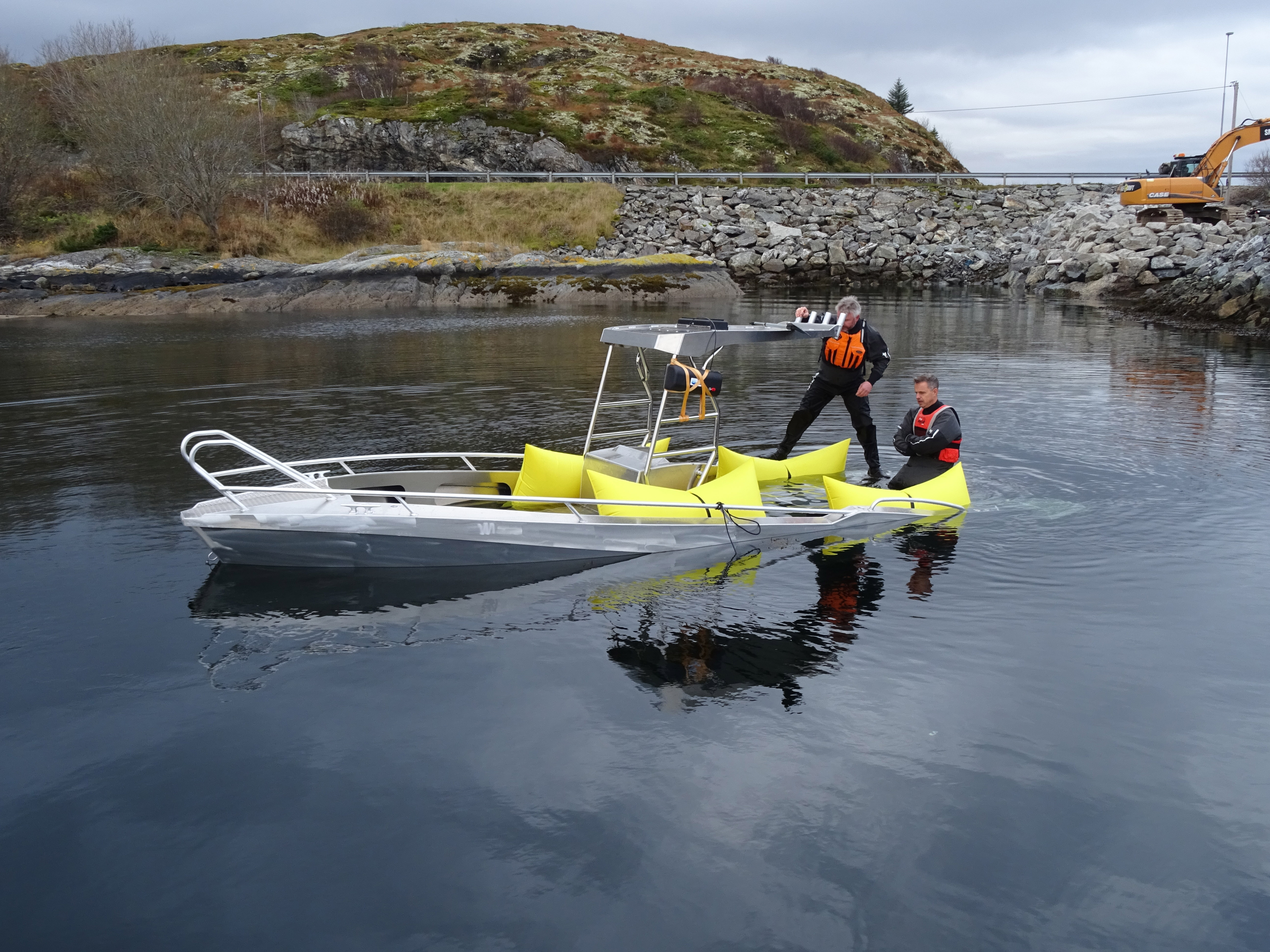
ANTISINK emergency flotation systems use inflatable bags to provide additional buoyancy and help prevent a vessel from sinking.
Built-In Flotation
Installed systems activate when rising water triggers the release of CO₂ into strategically positioned flotation bags. Depending on the vessel and circumstances, this additional buoyancy may help preserve time to call for assistance, coordinate a response and potentially keep people out of the water.
Two installed options accommodate different vessel configurations:
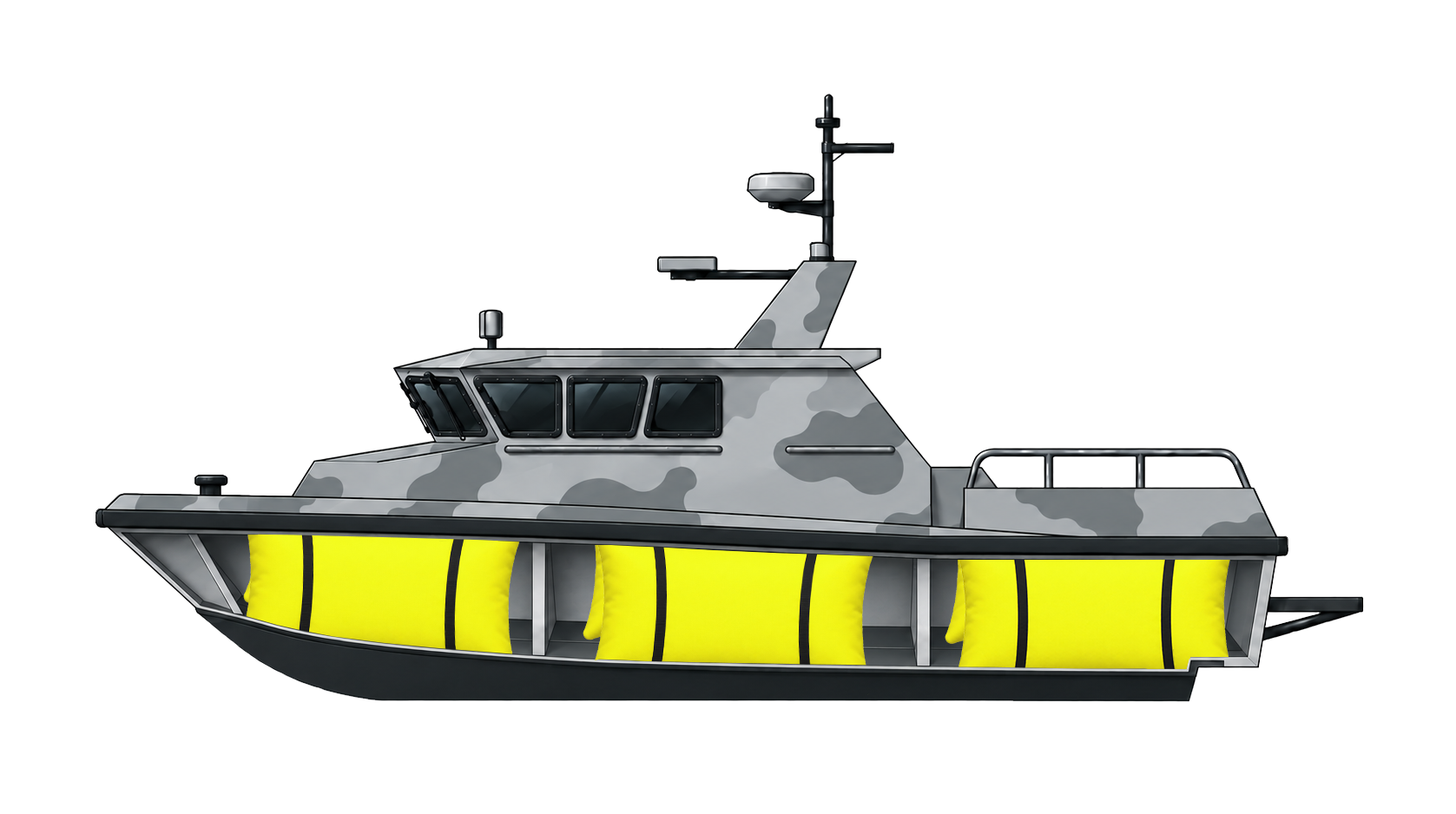
ANTISINK All-In-One:
Self-contained flotation modules with integrated CO₂ supplies, allowing flexible placement within a vessel
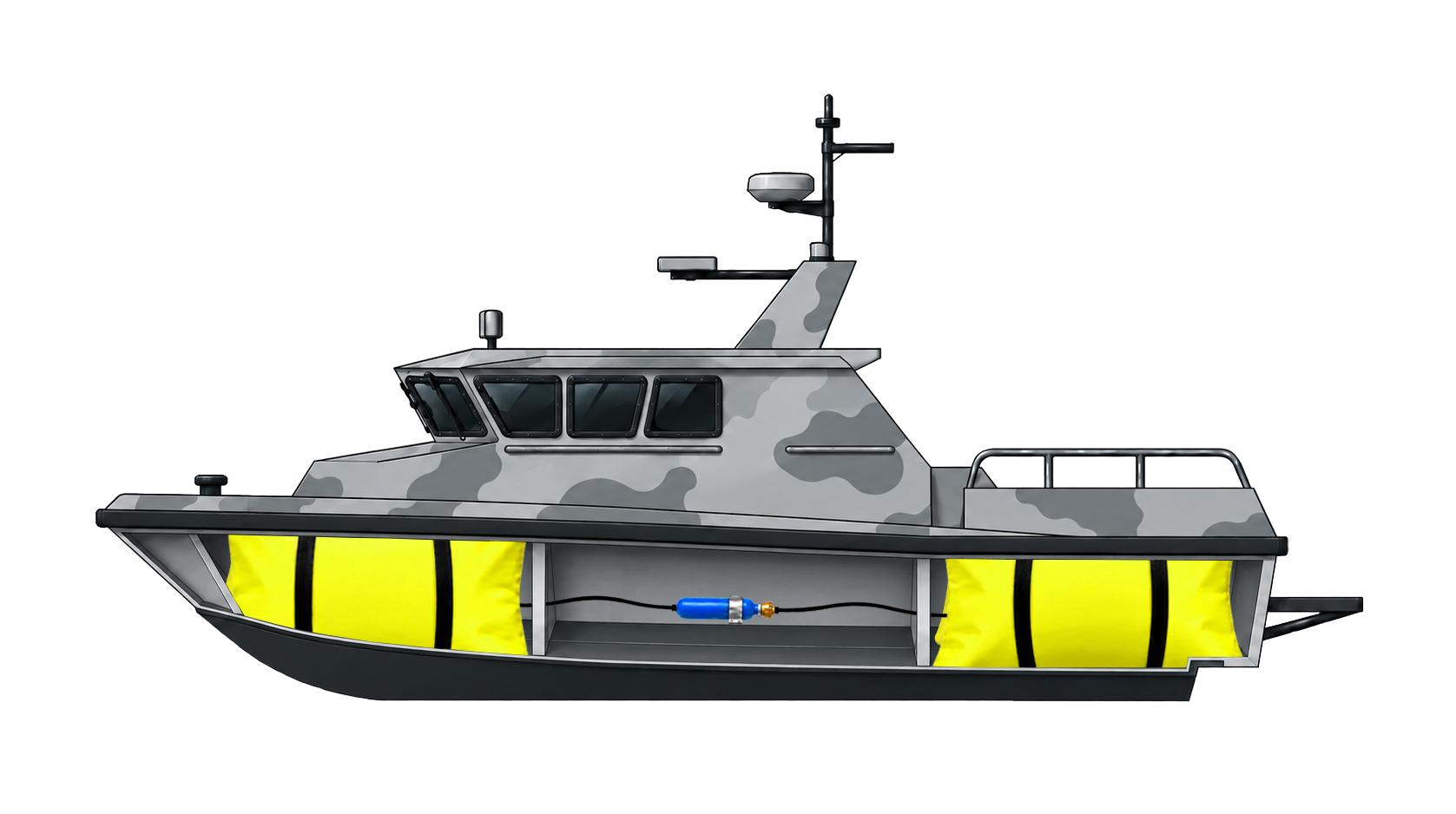
ANTISINK Large Boats Kit:
Distributed flotation bags connected to a central CO₂ supply, configured for larger vessels.
Both can be considered for new builds or retrofits. Selection depends on vessel construction, weight, layout and available installation space.
Portable Flotation
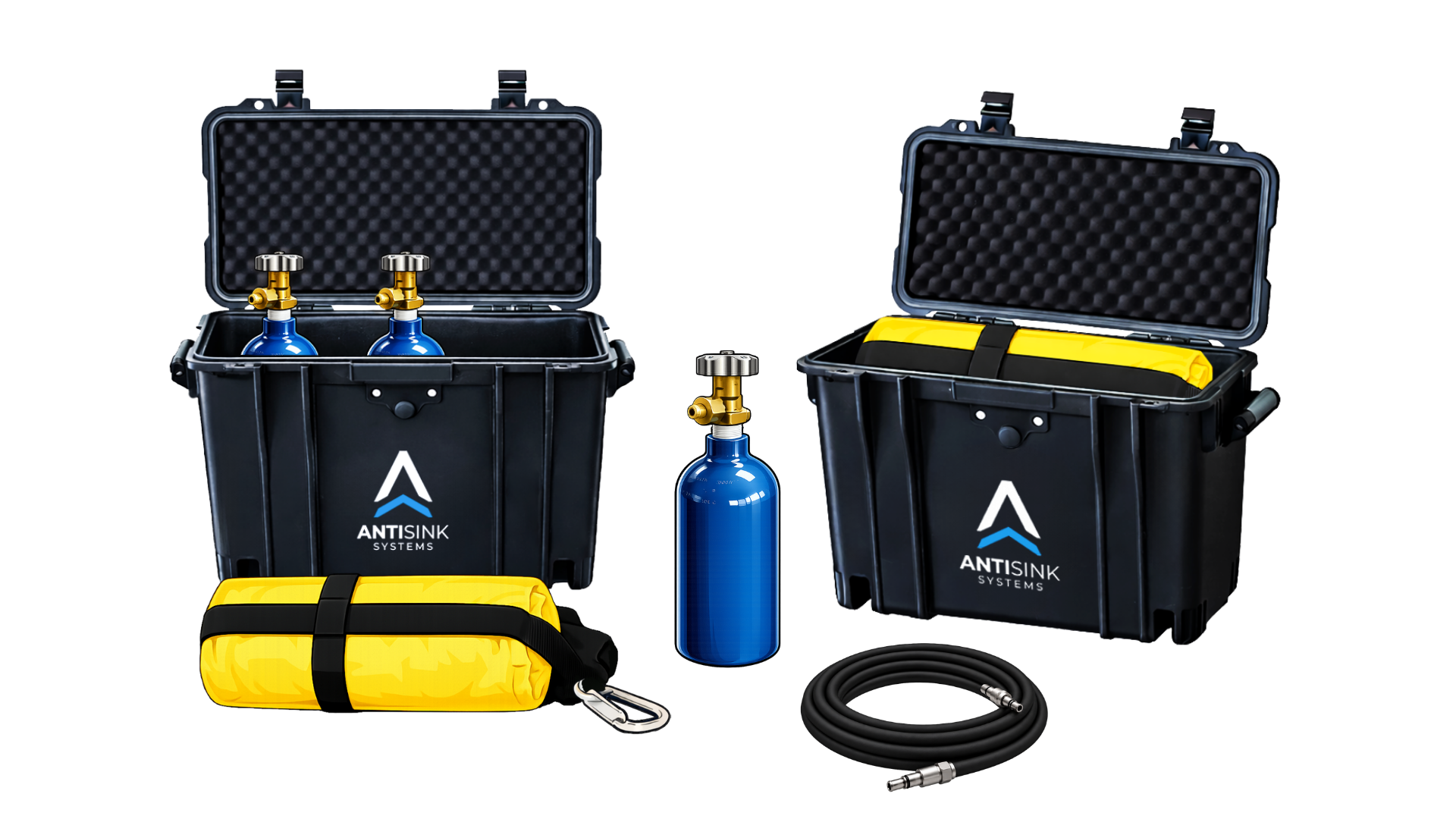
For organizations assisting vessels in distress, the ANTISINK Rescue Kit provides a portable approach to emergency flotation. Its buoyancy bags and inflation equipment can be brought to an incident to support efforts to keep a sinking vessel afloat.
This gives response teams an additional option alongside pumping and other damage-control measures. Its suitability and effectiveness depend on the vessel, conditions and deployment circumstances.
If Someone Enters the Water
Even with precautions in place, everyone onboard should be prepared for an unexpected immersion. Equipment needs will vary by vessel, operating area and activity, but accessibility and familiarity matter in every setting.
A lifejacket stored out of reach cannot provide immediate protection. A distress beacon is only useful if someone can access and activate it when needed. A recovery device needs to suit both the vessel and the person using it.
Before departure, make sure the people onboard know where emergency equipment is stored and how to use it. Check its condition and applicable service or expiry dates, and consider whether it is suitable for the conditions you may encounter.
Could You Recover Someone Who Cannot Help Themselves?
A person in cold water may be unable to grip a rope, climb a ladder or hold onto the side of a vessel. Your recovery plan should account for someone who is exhausted, injured or otherwise unable to assist.
Consider the height of the vessel’s sides, the equipment available and the abilities of the people remaining onboard. Simply reaching someone with a line does not necessarily mean you can bring them back aboard.
For vessel crews and response teams, this should form part of equipment selection and practical training. For recreational boaters, it is an important conversation to have with the people who regularly join you on the water.
Preparedness Goes Beyond Having Equipment Onboard
Cold-water preparedness brings together prevention, vessel flotation, personal protection, distress signalling and recovery. Each addresses a different part of an emergency, and each deserves attention before departure.
Whether you manage a fleet, operate a response vessel or head out with family and friends, the goal is the same: reduce the chance of immersion and be ready to act if it happens.
DSS Protection supports marine safety across Canada with emergency flotation systems, lifesaving equipment, inspection and servicing. Our team can help you identify equipment suited to your vessel and how you use it.
Learn More about Marine Safety Equipment